
Nowadays, there are multiple ways to search for products and services online.
Many people still use traditional search engines like Google to find what they are looking for. In fact, the majority of people still do. This is where SEO services are essential, helping your website rank higher in search results so potential customers can find your business.
Another increasingly popular option is using AI tools such as ChatGPT, Claude and Google AI Overviews. More and more people are turning to AI for fast, reliable answers when searching for products, services and information. Because of this, it’s becoming increasingly important for your business to appear in AI generated responses. This is exactly what GEO (Generative Engine Optimisation) is all about, helping your business appear in as many relevant AI searches as possible.
In this blog, we’ll explore the key similarities and differences between GEO and SEO, why it’s important to optimise for both, and the best techniques to help you succeed with each strategy.
Why does Generative Engine Optimisation (GEO) matter?
Traditional SEO has been the primary strategy for improving online visibility for decades because millions of people use search engines such as Google and Bing to find products, services and businesses online. So why is it now important to optimise for AI search engines as well?
Rather than simply listing websites within search results, AI platforms recommend businesses based on factors such as trust, authority, reputation and the quality of the information they provide.
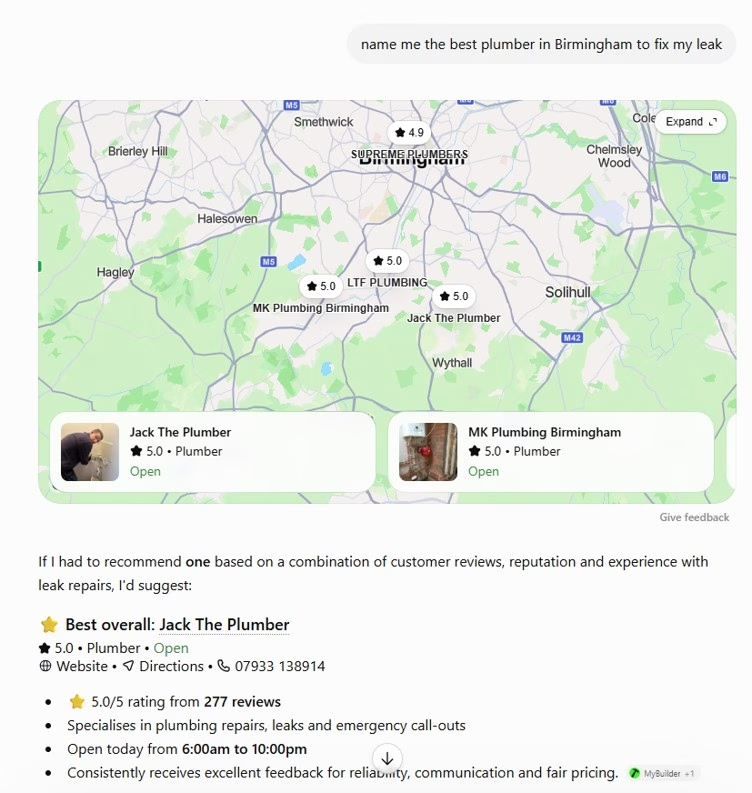
For example, if you ask ChatGPT, “Name me the best plumber in Birmingham to fix my leak”, it won’t simply return a list of plumbing companies. Instead, it will often recommend businesses alongside reasons why they may be the best choice, helping users make more informed buying decisions.
The same applies to informational searches.
Google is increasingly promoting AI Mode and AI Overviews, providing users with direct answers before the traditional search results. If someone searches, “What should I do if my car breaks down?”, Google may generate a summary using information from multiple trusted websites while citing the businesses that provided the original content.
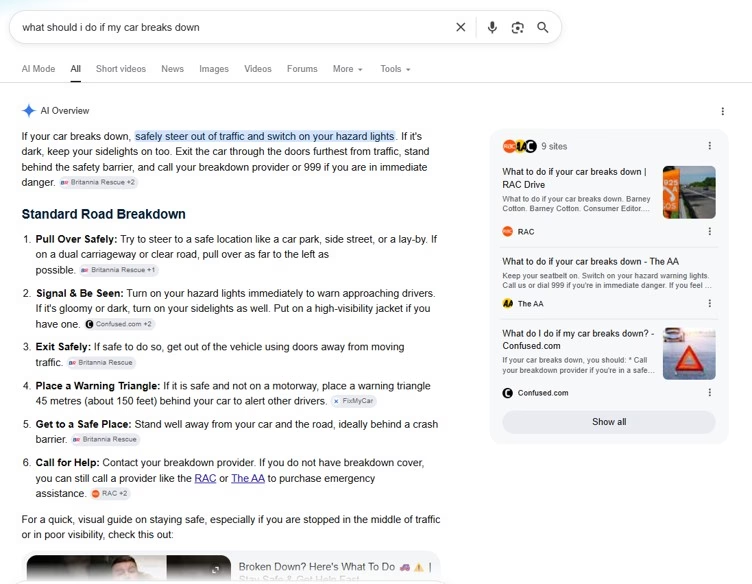
Appearing within these AI generated responses can significantly increase your visibility, helping you reach potential customers before they even begin browsing traditional search results.
What are the similarities between SEO & GEO?
One of the biggest misconceptions surrounding GEO is that it replaces SEO.
In reality, effective GEO starts with effective SEO.
AI platforms still rely on many of the same signals that search engines have used for years. Producing high quality content, earning backlinks from relevant websites, building topical authority and maintaining a technically healthy website all contribute towards improving your visibility in both traditional and AI powered search.
Creating content around the keywords and topics your audience is actively searching for also remains important. While traditional search queries are often short, AI users tend to ask much longer, more conversational questions. Creating content that answers these detailed searches gives your business more opportunities to appear within AI generated responses.
Trust and authority are equally important.
If your business demonstrates expertise through valuable content, positive brand mentions and links from respected industry websites or trusted news publications, both search engines and AI platforms are more likely to view your website as a credible source of information.
Content structure also plays an important role.
Using clear headings, concise paragraphs, bullet points and frequently asked questions makes it easier for both search engines and AI platforms to understand your content. Well organised content also increases the likelihood of AI referencing specific sections when generating answers.
Technical SEO continues to underpin both strategies.
Fast loading pages, mobile friendly websites, strong internal linking, structured data and crawlability all help search engines and AI platforms access and understand your content more effectively.
Although GEO introduces a new way of thinking about search visibility, it builds upon the same foundations that have made SEO successful for years. Rather than replacing SEO, it encourages businesses to strengthen it even further.
What are the differences between SEO & GEO?
While SEO and GEO share many of the same foundations, there are some key differences in how users search and how information is presented.
The biggest difference is how results are delivered.
With traditional search engines, your goal is to rank as highly as possible within a list of search results. Users then decide which website to visit based on factors such as the page title, meta description and brand reputation.
With GEO, AI does much of this work for the user.
Instead of simply listing websites, AI platforms analyse information from multiple trusted sources before generating a direct answer. If your business is referenced, it may be recommended as part of that response, often alongside an explanation of why your company is a suitable choice.
For example, someone searching Google for “electricians near me” will usually see a list of websites and choose which one to visit.
However, someone asking ChatGPT, “Who is the best electrician in Staffordshire to rewire my house?” is more likely to receive a tailored recommendation with supporting reasons based on the information AI has gathered.
This means GEO is focused less on achieving a particular ranking position and more on becoming a trusted source that AI is confident enough to reference.
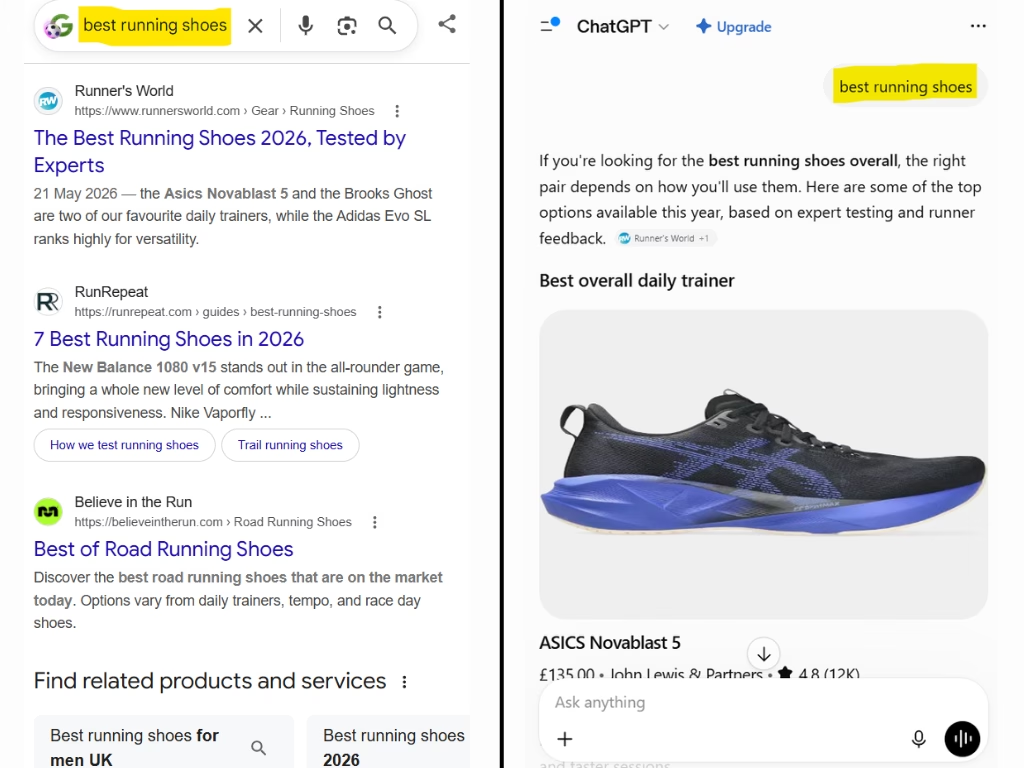
The way people search is also evolving.
Traditional search engines often involve shorter keyword based searches such as:
- SEO agency Birmingham
- Emergency plumber near me
- Best running shoes
AI searches are typically much longer and more conversational.
For example:
- Which SEO agency in Birmingham specialises in manufacturing companies?
- My boiler has stopped working. Who should I call in Wolverhampton?
- What are the best running shoes for someone training for their first marathon?
Because AI is designed to understand natural language, businesses should create content that genuinely answers these types of questions rather than simply targeting individual keywords.
Another key difference is the importance of citations.
In traditional SEO, ranking highly is often the primary objective.
With GEO, your website may not hold the number one organic position, yet AI could still reference your content if it provides the clearest, most trustworthy answer.
This means businesses should focus on creating the most helpful content possible rather than simply chasing rankings.
Ultimately, SEO is about helping search engines understand and rank your website, while GEO is about helping AI understand, trust and confidently recommend your business.
Top GEO Tips
As AI search continues to grow, businesses should begin adapting their content to make it easier for AI platforms to understand, trust and reference.
Here are some practical ways to improve your GEO strategy.
Answer Questions Clearly
AI platforms are designed to answer questions.
Rather than writing content purely around keywords, think about the questions your customers are actually asking.
For example, instead of only targeting a keyword such as “accident repairs”, create content that answers questions such as:
- What should I do if I’ve been involved in a car accident?
- What’s the accident repair process?
- How long do accident repairs usually take?
Providing clear, easy to understand answers increases the likelihood of your content being referenced within AI generated responses.
Build Topical Authority
AI platforms favour businesses that consistently demonstrate expertise within a particular subject.
Instead of publishing a single article about a children party, create a range of related content covering the best type of parties, tips on throwing a party, how to organise a party and everything in between.
The more comprehensive your content is around a topic, the more likely AI is to recognise your business as an authority.

Write Helpful, Natural Content
Keyword optimisation still matters, but readability is becoming even more important.
Avoid stuffing pages with keywords or writing content purely for search engines.
Instead, write naturally, explain concepts clearly and focus on helping your audience solve their problems.
Content that genuinely helps readers is far more likely to be referenced by AI platforms than content created solely to rank for keywords.
Use a Clear Content Structure
Well-structured content makes it easier for both search engines and AI platforms to understand your pages.
Use:
- Clear H1, H2 and H3 headings
- Short paragraphs
- Bullet point lists
- Tables where appropriate
- Frequently asked questions (FAQs)
Breaking information into logical sections helps AI identify specific answers that can be referenced within generated responses.
Demonstrate Experience and Expertise
AI platforms look for signals that suggest your content is trustworthy and accurate.
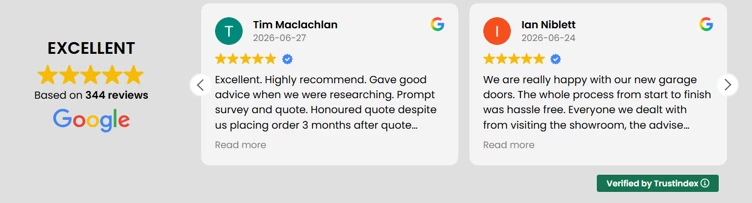
Publishing original research, case studies, expert insights, statistics and genuine client results can all strengthen your credibility. Reviews, testimonials and mentions from respected industry websites also help reinforce trust in your business.
The stronger your reputation online, the more confidence AI has in referencing your content.
Continue Building High Quality Backlinks
Backlinks remain an important trust signal for both SEO and GEO.
Links from relevant industry websites, respected organisations and authoritative news publications all help demonstrate that your business is credible and knowledgeable within your industry.
Rather than chasing large volumes of low quality links, focus on earning backlinks that genuinely add authority to your website.

Keep Your Technical SEO Strong
None of your content matters if search engines and AI platforms struggle to access it.
Maintain a technically healthy website by ensuring pages load quickly, work well on mobile devices, are properly indexed and contain a logical internal linking structure.
Elements such as XML sitemaps, structured data and crawlability continue to support both SEO and GEO by making it easier for search engines and AI platforms to understand your website.
Should You Focus on SEO or GEO?
The simple answer is both.
SEO continues to drive millions of searches every day and remains one of the most effective ways to generate long term organic traffic.
At the same time, AI search is changing how people discover businesses and consume information. More users are turning to platforms like ChatGPT and Google AI Overviews to receive recommendations and answers before they even visit a website.
Rather than replacing SEO, GEO builds upon the foundations of a strong SEO strategy.
Businesses that invest in both will be in the strongest position to increase their visibility across traditional search engines and AI powered search as the way people search continues to evolve.
Conclusion
Search behaviour is changing rapidly and businesses need to evolve alongside it.
Traditional search engines remain one of the most valuable sources of website traffic, making SEO an essential part of any long term digital marketing strategy. At the same time, the rise of AI platforms such as ChatGPT, Claude and Google AI Overviews means that GEO is becoming an increasingly important way to improve your online visibility.
The good news is that these strategies work together rather than compete against one another.
By creating genuinely helpful content, building topical authority, earning high quality backlinks and maintaining a technically sound website, you’ll improve your chances of ranking within traditional search engines while also increasing the likelihood of being referenced within AI generated responses.
As AI search continues to evolve, businesses that focus on demonstrating expertise, providing the best answers and building trust with both users and search engines will be the ones that generate the greatest long term success.